By Neda Veleva · · 8 min read
Jensen Huang at the G20 Innovation Ministerial: the five layers on which the AI economy is built
NVIDIA’s founder and CEO explained why artificial intelligence begins with electricity and chips, but creates economic value only when it reaches real-world applications.
← Back to overview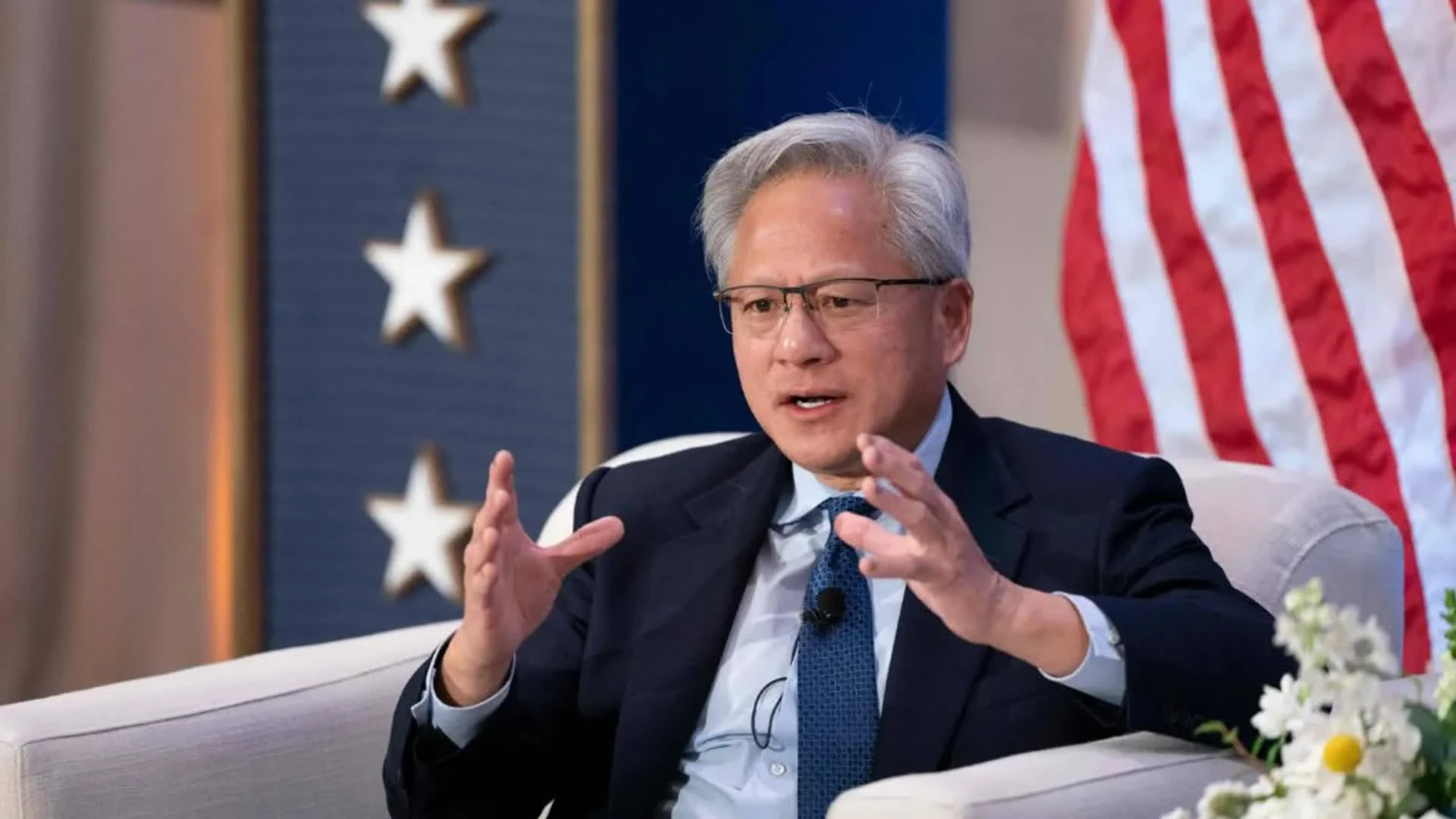
On a screen, artificial intelligence looks like software. Behind every answer, generated image or automated process, however, lies a physical system of electricity, semiconductors, networks, cooling and data centers.
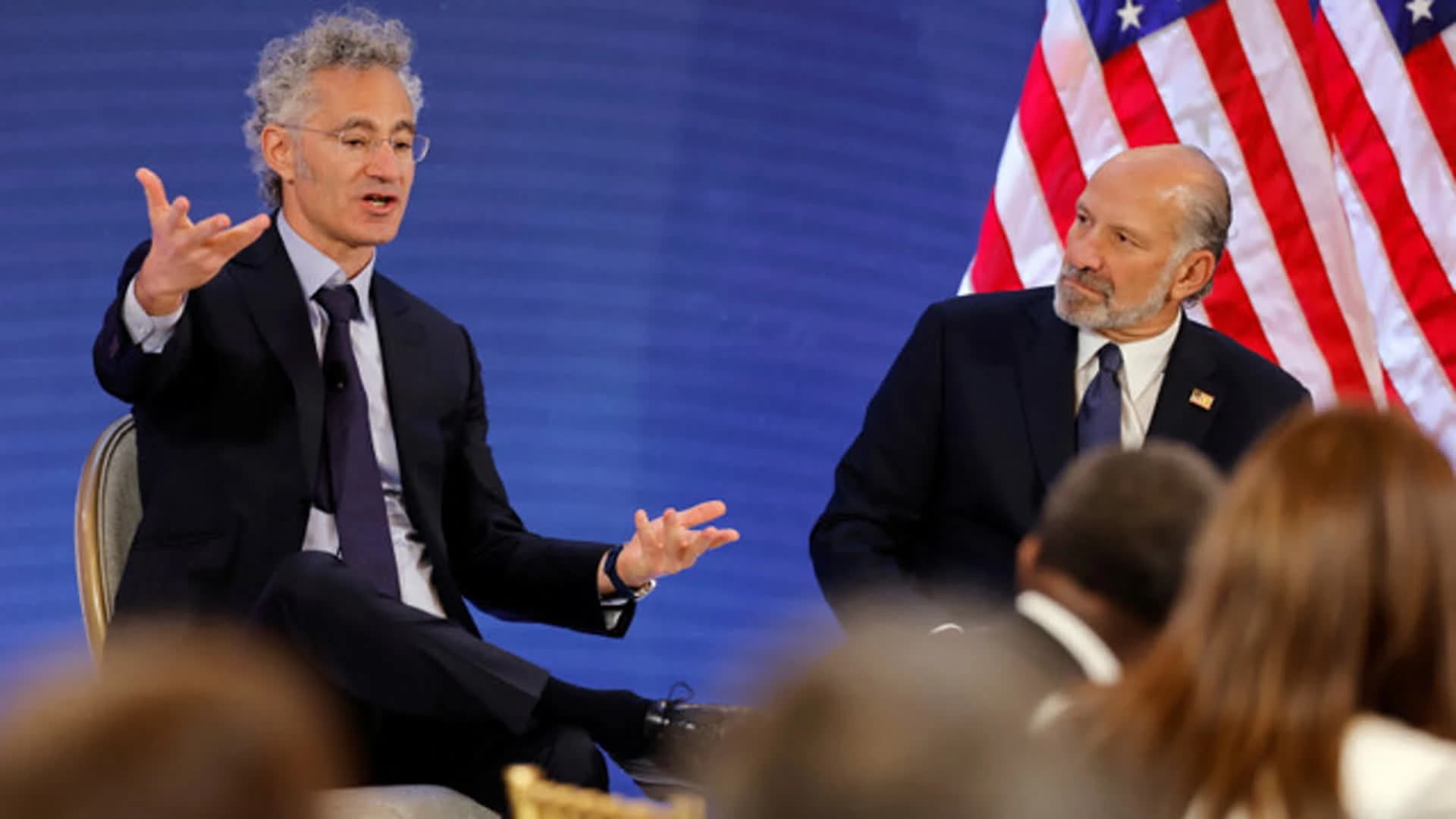
This was precisely the system Jensen Huang drew attention to on the second day of the G20 Innovation Ministerial. NVIDIA’s founder and CEO took part in an in-person conversation with US Secretary of Commerce Howard Lutnick.
Huang described the development of artificial intelligence as the largest technology platform shift in human history. His central argument was that AI is not a standalone product or a single industry. It is a new kind of infrastructure whose construction depends on five interconnected layers.
The five layers of artificial intelligence
Huang presented the system through the model of a “five-layer cake”:
- electricity;
- chips and computer systems;
- data centers;
- AI models;
- data and applications.
Each layer depends on the one below it. Large computing systems cannot operate without enough electricity. Without specialized chips, the necessary computing capacity does not exist. Without data centers, chips cannot be connected and used at scale. Models are trained and run on this infrastructure, while their actual value emerges through applications.
The final layer is closest to the economy. This is where artificial intelligence reaches healthcare, education, manufacturing, science, financial services and companies’ everyday work.
Chips can provide computing power, but they do not solve a specific problem on their own. The economic impact emerges when that power is turned into a product, service or new way of working.
Turning energy into productive intelligence
Huang described data centers as infrastructure that converts electricity into “valuable productive intelligence.”
The phrase shows how physical the AI economy is. The development of models depends not only on scientific discoveries and software, but also on power plants, transmission grids, construction, cooling systems, communications equipment and semiconductor manufacturing.
Electricity thus becomes one of the main factors determining the scale and cost of artificial intelligence. The larger and more widely used models become, the more computing infrastructure is needed to train and run them.
Huang’s position aligned with one of the leading themes of the G20 Innovation Ministerial: access to sufficient energy and computing capacity already affects the ability of countries and companies to develop and deploy new technologies.
AI as national infrastructure
Huang compared artificial intelligence to water, roads, electricity and the internet. His message to ministers was that every country needs sufficient AI infrastructure to support its own economy.
This infrastructure provides computing capacity for scientists, students, companies, public institutions and startups. Without access to it, local organizations remain dependent on foreign providers or gain new capabilities later and at a higher cost.
According to Huang, not every country needs to build all five layers independently. Manufacturing the most complex chips, for example, requires enormous capital, specialized knowledge and international supply chains.
Every country must, however, determine which layers it can participate in and how it will encourage the adoption of artificial intelligence in its own industries.
For one country, the strategic advantage may lie in energy or data centers. For another, it may lie in research, local data, language models, education or applications for particular industries.
Diffusion matters as much as development
One of the strongest emphases in Huang’s remarks was the spread of the technology. He urged countries to encourage the adoption of artificial intelligence in education, healthcare, manufacturing and science.
This distinction matters. Creating a leading model and using such a model are different forms of participation in the AI economy.
A country may not develop its own global model, but it can build companies that use existing systems for diagnostics, industrial control, logistics, agriculture, education or public services. It is at this application layer that local products, jobs and economic benefits can emerge.
Access to technology is therefore not enough. It takes specialists, data, entrepreneurs, research organizations and companies capable of turning models’ general capabilities into solutions to specific problems.
How artificial intelligence changes work
Huang challenged the argument that artificial intelligence will inevitably eliminate all jobs. In his view, automation will affect individual tasks, while the fundamental purpose of many professions will remain.
This means work can be reorganized. Some administrative, analytical or repetitive activities can be taken over by AI systems, allowing people to devote more time to decisions, communication, care, creativity and responsibility.
At the same time, building the infrastructure itself creates demand for engineers, electricians, construction specialists, data center operators, network experts and people who maintain complex equipment.
Huang’s position is that artificial intelligence can increase workers’ capabilities and productivity. Realizing that potential depends on access to the technology and on preparing people to use it.
Regulating real problems
During the G20 Innovation Ministerial, Huang urged ministers not to create rules based solely on “theoretical harms.” In his view, regulation should address real, practical problems associated with specific uses of the technology.
This position is close to the approach reflected in the Carolina Principles for Emerging Technologies. The agreed principles call for applying existing sectoral rules where appropriate and developing new requirements in genuinely new circumstances.
Huang also included safety and security among the issues that should be considered alongside economic opportunity. His emphasis was on policies that enable adoption while addressing identifiable problems.
The greatest risk, according to Huang
Huang described falling behind as the worst outcome for a country. In his view, a discussion dominated by fear and uncertainty can slow investment, infrastructure development and adoption.
This warning was not directed only at countries seeking to develop their own models. It also applies to those that must decide how to use the technology within their existing economies.
His message at the G20 Innovation Ministerial was clear: competition in artificial intelligence is not decided solely by who has the most powerful model. It depends on a country’s ability to provide energy, computing capacity, skills and applications that reach real industries.
Huang’s five layers show the entire chain. Electricity powers the chips. Chips build computing capacity. Data centers make that capacity available to models. And applications turn models into economic value.
Sources
- whitehouse.govThe White House: closing announcement on the G20 Innovation Ministerial (opens in a new tab)
- dailytarheel.comThe Daily Tar Heel: reporting from day two (opens in a new tab)
- reuters.comReuters: Jensen Huang’s position on AI regulation (opens in a new tab)
- blogs.nvidia.comNVIDIA: the five-layer model of AI infrastructure (opens in a new tab)
- youtube.comCNBC: interview with Jensen Huang during the G20 Innovation Ministerial (opens in a new tab)