By Neda Veleva · · 9 min read
Bob Mumgaard at the G20 Innovation Ministerial: fusion’s path from the laboratory to the grid
The co-founder and CEO of Commonwealth Fusion Systems explained how fundamental science, private capital, and regulatory clarity can turn an experimental technology into an operating power plant.
← Back to overview
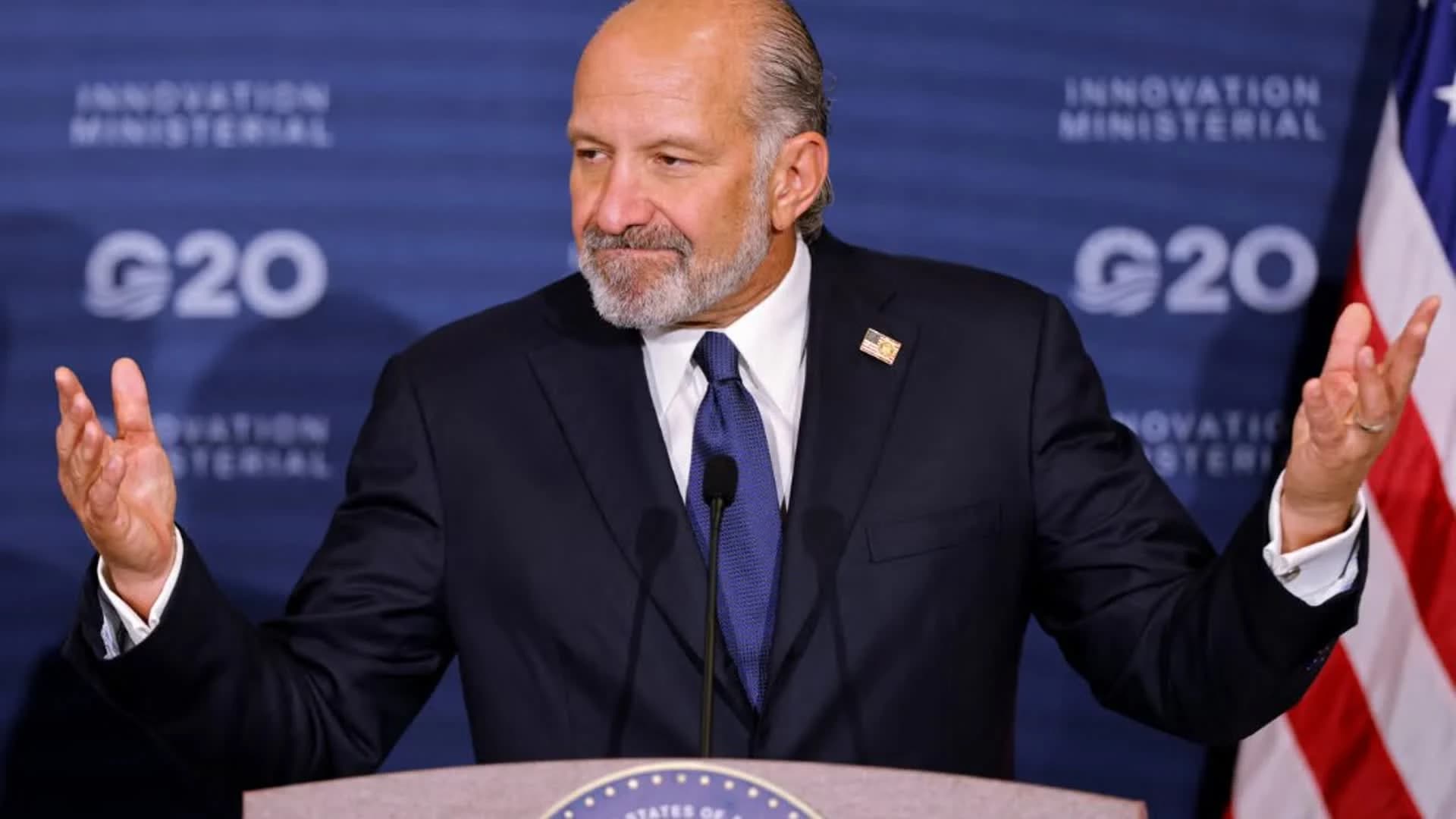
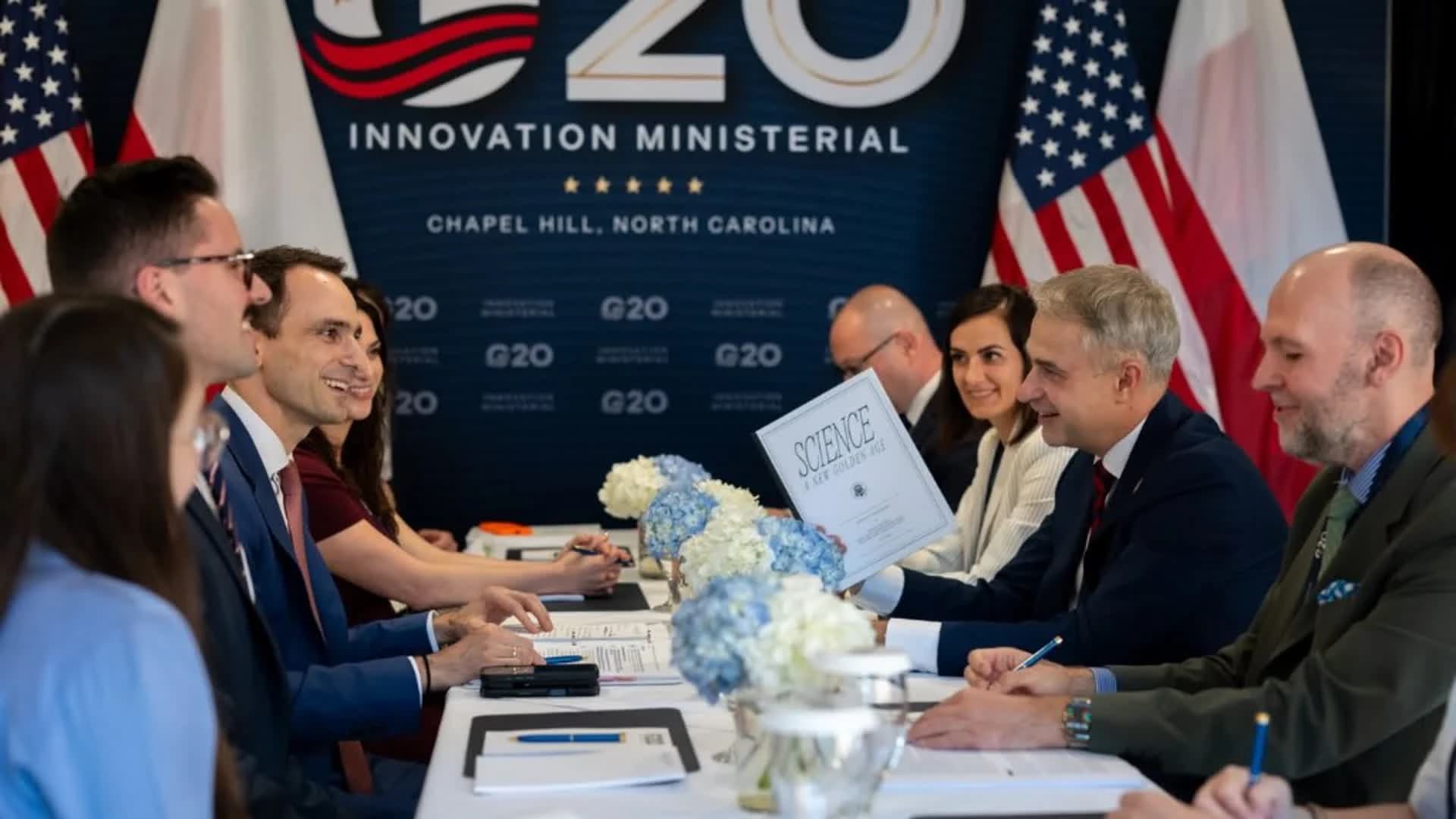
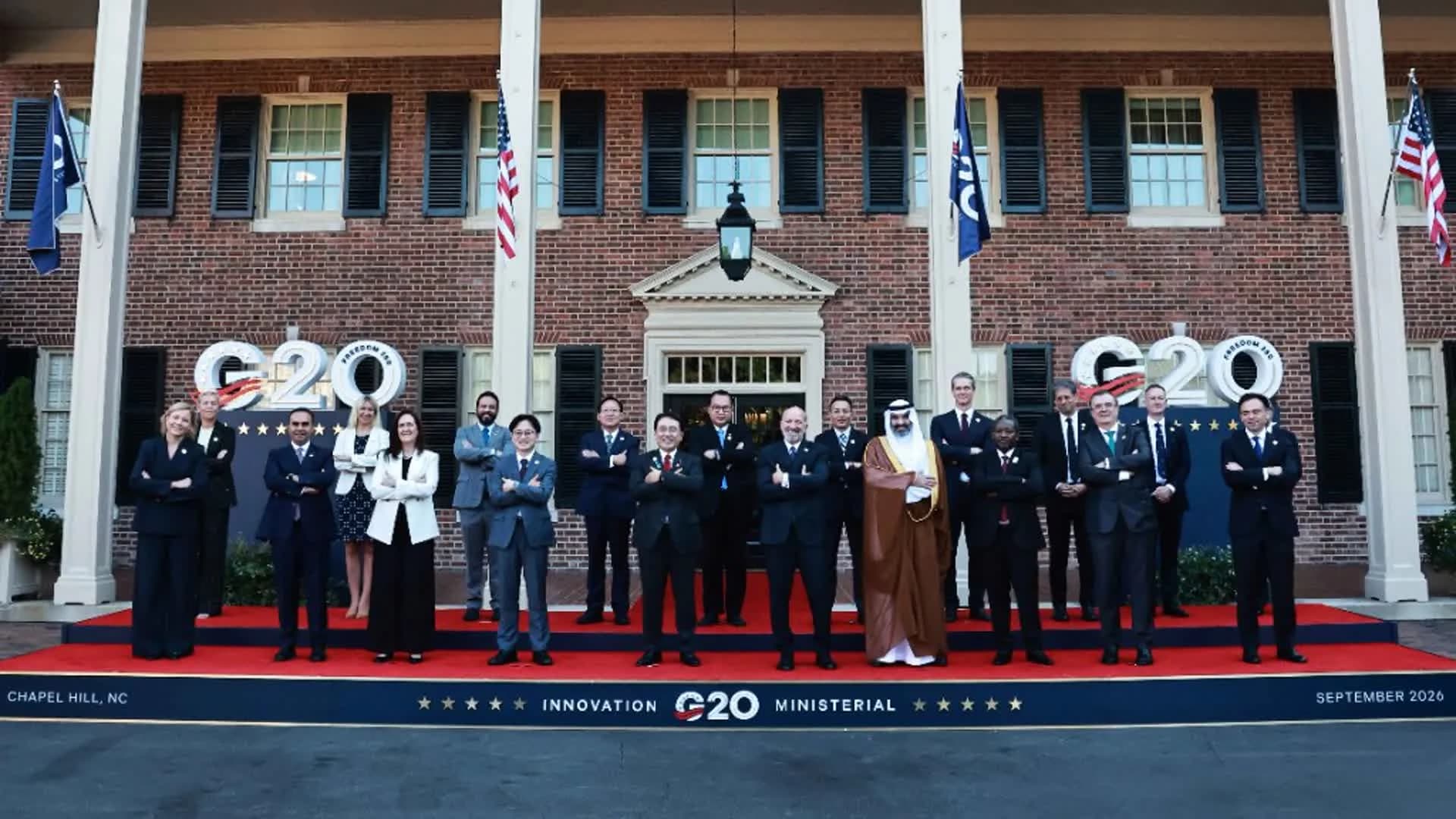
On September 1, 2026, Bob Mumgaard joined by video for the final public conversation of the first day of the G20 Innovation Ministerial. The discussion was led by Michael Kratsios, Director of the White House Office of Science and Technology Policy.
After Elon Musk warned of a possible electricity shortfall and David Sacks examined the infrastructure behind data centers, Mumgaard turned the discussion to one of the technologies that could add new generating capacity: fusion energy.
His focus was not solely on physics. Mumgaard presented the entire path from scientific discovery to a commercial product: research, investment, engineering execution, regulation, manufacturing, and connection to the electricity grid.
His participation as CEO of Commonwealth Fusion Systems is noted in the official White House closing announcement.
Energy demand exists. The challenge is turning the technology into a product
Nuclear fusion combines light atomic nuclei and releases energy. It is the process that powers the stars. To reproduce it on Earth, fuel must be turned into extremely hot plasma and confined for long enough under the right conditions.
According to Mumgaard, the main obstacle to commercialization is not a lack of a market. Rising electricity consumption, the electrification of the economy, and the construction of AI infrastructure are creating demand for new energy sources.
The harder question is how to turn decades of scientific research into a technology that can be built, licensed, financed, and operated as a real power plant.
For Mumgaard, this transition requires three elements to come together: rigorous science, sufficient capital, and an organization capable of executing complex engineering projects. Fusion is not a product that can be distributed through a software update. It requires new materials, production lines, large facilities, and international supply chains.
The private sector enters a field developed for decades by public laboratories
Mumgaard placed the development of Commonwealth Fusion Systems in the context of a broader shift in the sector. For a long time, fusion was developed primarily through universities, national laboratories, and publicly funded research programs. In recent years, private companies and institutional investors have joined them.
Fusion Industry Association data show that 56 private fusion companies are operating worldwide in 2026. Total reported funding since 2021 has reached $14.24 billion, of which $4.48 billion was raised in the past twelve months.
Commonwealth Fusion Systems is among the best-funded companies in the sector. Following a new investment round in 2026, the company’s total capital raised reached approximately $4 billion.
These figures support Mumgaard’s central argument: fusion is now attracting capital on a scale that allows companies to move from scientific development to the construction of physical facilities.
The Fusion Industry Association’s 2026 report also shows the constraints facing the sector. Funding, energy efficiency, materials resistant to neutron irradiation, and securing the fuel cycle remain among the most frequently cited challenges.
How public research attracts private capital
In his presentation, Mumgaard did not pit public and private funding against one another. He presented them as successive stages in the technology’s development.
Publicly funded programs build scientific knowledge, laboratory infrastructure, and expertise. Private companies use this foundation to organize engineering execution, attract capital, and develop a product for a specific market.
Mumgaard emphasized the importance of partnerships with universities and national laboratories. In his view, these partnerships should provide access to accumulated expertise while maintaining clear intellectual property rules. Early public support can help scientific ideas reach a stage at which they can attract substantial private funding.
This model is directly connected to the Carolina Principles for Emerging Technologies, which emphasize fundamental research and the creation of better pathways from scientific discovery to usable technology.
Regulatory clarity as a condition for investment
Building a fusion facility requires long-term investment before the technology begins generating electricity. Mumgaard therefore argued that investors need to know what requirements will apply to future projects.
He cited as a positive example an approach that regulates fusion facilities according to their specific risks, rather than automatically subjecting them to the rules for conventional nuclear fission reactors.
The US Nuclear Regulatory Commission is developing a separate framework for fusion machines. It is based on oversight of the radioactive materials used and produced, radiation protection, waste management, and decommissioning.
The approach is close to regulatory models for particle accelerators, but includes distinct requirements tailored to the diversity of fusion technologies. According to official information from the Nuclear Regulatory Commission, the rules are still being developed in cooperation with US states.
For Mumgaard, the value of this model lies in predictability. A clear regulatory direction allows companies and investors to plan years ahead without removing public and environmental safety requirements.
SPARC is a scientific demonstration, not a power plant
Commonwealth Fusion Systems’ main current project is SPARC, a compact tokamak under construction in Devens, Massachusetts.
A tokamak uses strong magnetic fields to confine hot plasma without allowing it to touch the machine’s walls. SPARC relies on high-temperature superconducting magnets, which enable a stronger magnetic field in a relatively compact facility.
In August 2026, Mumgaard reported that the project was around 80% complete. The company’s goal is for SPARC to achieve Q>1 in 2027, meaning that the fusion reaction produces more energy than the external energy supplied to heat the plasma.
This is an important scientific threshold, but it does not mean generating electricity for the grid. SPARC is not designed as a commercial power plant. Its task is to validate the physics and engineering solutions on which Commonwealth Fusion Systems plans to base its next project.
The project’s current status and its target for 2027 are described by Commonwealth Fusion Systems and in an August 2026 article in Utility Dive.
ARC is the project intended to generate electricity
The next step in Commonwealth Fusion Systems’ plan is ARC, a commercial fusion power plant being prepared for construction in Chesterfield County, Virginia.
ARC is designed to produce 400 megawatts of net electric power. The company expects the plant to begin supplying electricity to the grid in the early 2030s.
Google has already signed an agreement to purchase 200 megawatts of the future output. The company also has the option to buy electricity from subsequent Commonwealth Fusion Systems plants.
The agreement demonstrates the existence of a future customer, but electricity delivery remains dependent on completing the project’s scientific, engineering, regulatory, and construction stages. The ARC plan rests directly on the results that must first be achieved with SPARC.
Details of the capacity, location, and agreement with Google are published in the official Commonwealth Fusion Systems announcement.
AI’s dual role
In the picture Mumgaard presented, AI has two distinct roles.
The first is as a tool. Large-scale computing capacity, AI systems, simulations, and new materials can accelerate the design and testing of complex physical technologies. According to Mumgaard, today’s tools allow some developments to advance faster than would have been possible five or ten years ago.
AI’s second role is as a source of new demand. Data centers need a constant and reliable electricity supply. This creates a market for technologies capable of adding large amounts of continuous generating capacity.
AI thus both supports the development of fusion and increases the need for the energy this technology aims to produce.
From a scientific result to an operating power plant
Bob Mumgaard’s contribution to the G20 Innovation Ministerial was to present the commercialization of fusion as a sequential process.
Public scientific research creates the knowledge. Private capital finances engineering execution. The regulatory framework provides the necessary predictability. SPARC must validate the underlying physics and technology. ARC must use what is learned to generate electricity for the grid.
The target of beginning commercial generation in the 2030s is Commonwealth Fusion Systems’ plan. Achieving it depends on SPARC’s results and on overcoming the remaining engineering challenges.
This connection between ambition and execution was at the heart of the conversation: a scientific breakthrough has economic significance only when there is a viable path from the laboratory to real infrastructure.
Sources
- whitehouse.govThe White House: official closing announcement for the G20 Innovation Ministerial (opens in a new tab)
- dailytarheel.comThe Daily Tar Heel: coverage of the first day of the G20 Innovation Ministerial (opens in a new tab)
- singjupost.comFull transcript of the public conversation with Bob Mumgaard (opens in a new tab)
- cfs.energyCommonwealth Fusion Systems: SPARC’s technology and objectives (opens in a new tab)
- cfs.energyCommonwealth Fusion Systems: the Google partnership and the ARC plan (opens in a new tab)
- fusionindustryassociation.orgFusion Industry Association: Global Fusion Industry Report 2026 (opens in a new tab)
- nrc.govNuclear Regulatory Commission: the regulatory framework for fusion machines (opens in a new tab)
- utilitydive.comUtility Dive: SPARC’s progress and Commonwealth Fusion Systems’ funding (opens in a new tab)
- youtube.comVideo of the conversations with Elon Musk, David Sacks, and Bob Mumgaard (opens in a new tab)