By Neda Veleva · · 10 min read
Tom Brown at the G20 Innovation Ministerial: the industry behind the new economy of intelligence
Anthropic’s co-founder and chief compute officer brought three developments into a single picture: the rapid advance of AI models, growing demand for computing power and the scaling of intellectual labor.
← Back to overview
Tom Brown began where conversations about AI rarely begin: the construction site.
Developing models requires data centers. Data centers require land, permits, construction crews and new energy capacity. Then comes the second part of the process: computing infrastructure is turned into analysis, programming, scientific research and solutions.
Within a single conversation, Brown thus connected construction cranes to oncology laboratories.
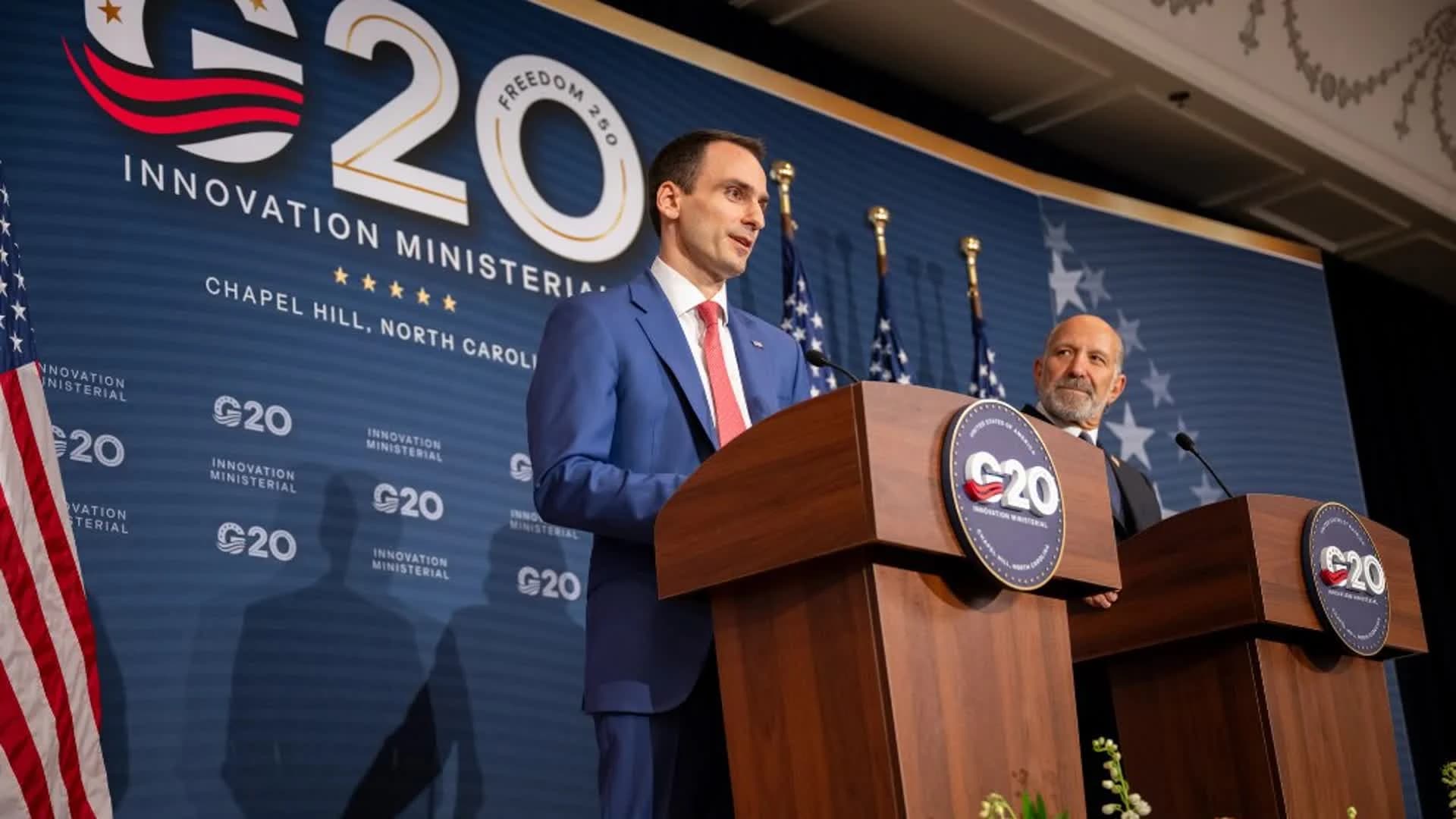
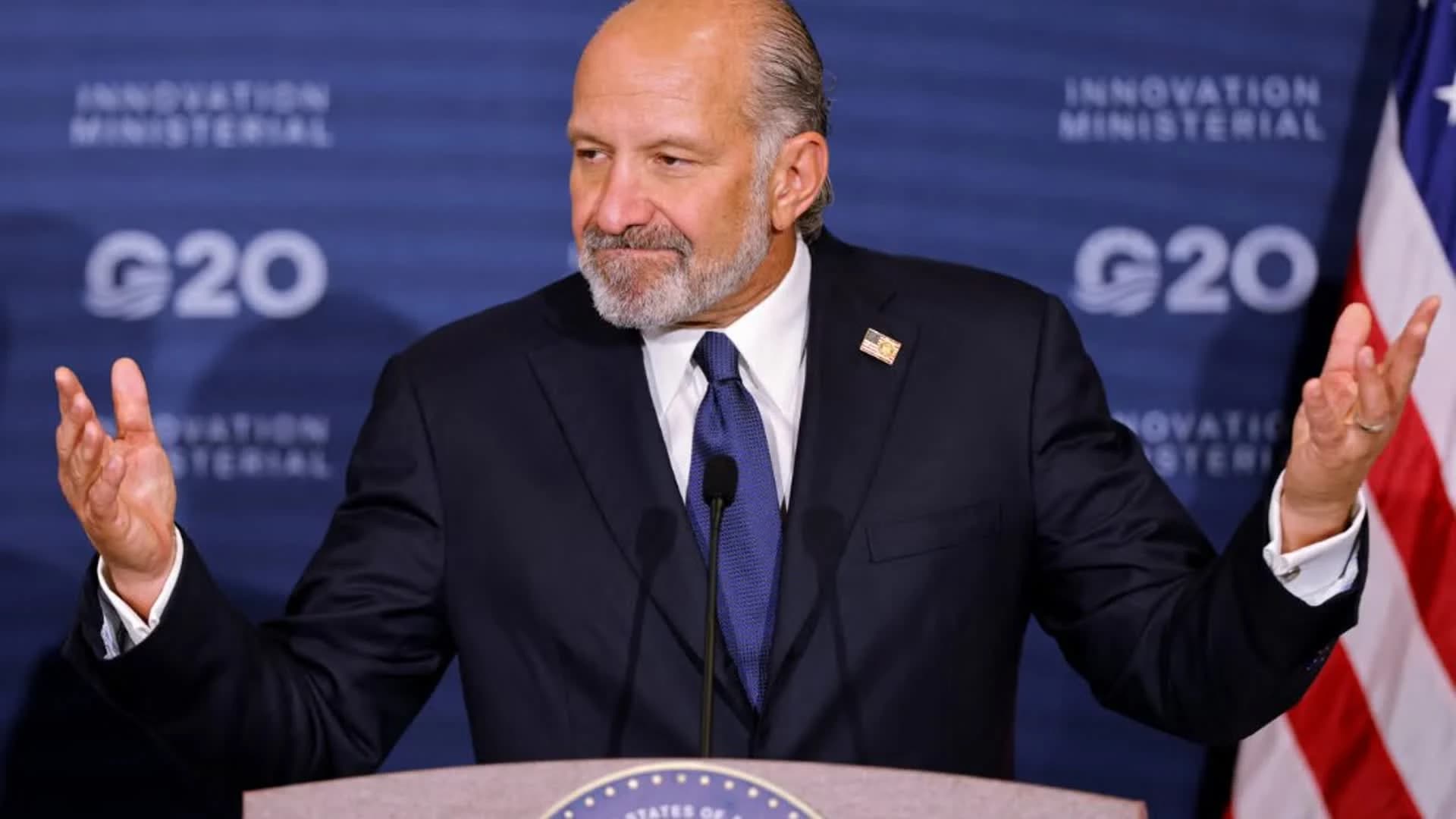
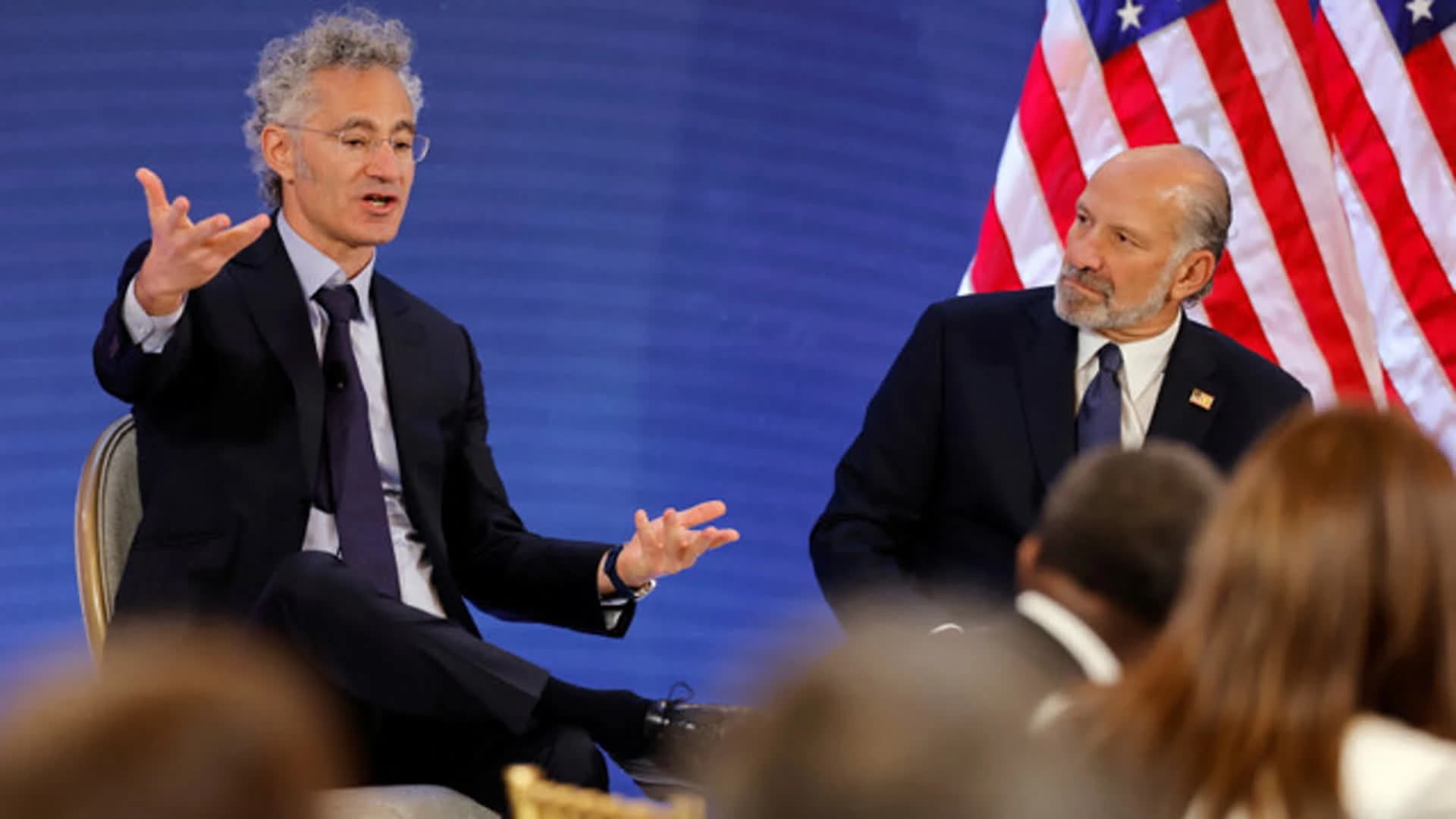
On September 2, 2026, he took part in an in-person conversation with US Secretary of Commerce Howard Lutnick in Chapel Hill, North Carolina. The official White House summary lists Brown among the technology leaders Lutnick spoke with during the G20 Innovation Ministerial.
Three developments already reinforcing one another
Brown set out three main messages for the ministers in attendance.
The first was that AI models’ capabilities are growing rapidly and, in his forecast, will continue to advance at a similar pace.
The second concerned demand. He said it is growing not merely quickly but exponentially, multiplying every year.
The third concerned the physical infrastructure needed to serve that demand. Brown described the industrial buildout around AI as a process of historic proportions, larger even than railroad construction in the nineteenth century.
This comparison is his assessment of the scale of forthcoming investment. It sketches a world in which AI development no longer depends only on researchers and software engineers. Energy companies, semiconductor manufacturers, construction firms, data centers and public institutions are all involved.
The major constraint is physical
Asked how countries can participate in the AI economy, Brown gave a concrete answer: through more data centers and more computing capacity.
He identified electricity and labor as the main constraints on infrastructure expansion. Building new centers requires suitable sites, administrative permits and enough people to carry out the construction and technical work.
Speaking to ABC11, Brown described the developments as an industrial buildout unprecedented in human history. He also confirmed Anthropic’s participation in the US Ratepayer Protection Pledge initiative, which concerns the construction of additional energy capacity for large data centers.
For countries, this infrastructure means investment, construction activity, jobs and tax revenues. For AI companies, it means access to the resource on which model development depends.
This is the first major economic effect Brown outlined: reindustrialization driven by the need to build an enormous volume of physical assets.
Intellectual labor moves to a new scale
The second effect begins once the infrastructure has been built.
The reason companies invest in more computing power is models’ ability to perform useful work. Brown described this shift as an expansion of the effective workforce for intellectual labor.
This category includes programming, analysis, research, working with documents and solving complex problems. In his view, intellectual labor underpins much of economic value and prosperity.
This also explains Anthropic’s early focus on programming. Software work can be carried out entirely in a digital environment. A model can read code, identify problems, propose solutions and check results without operating a physical laboratory.
Brown said models already take part in a significant share of the intellectual work within Anthropic, including software engineering and troubleshooting during the training of new systems.
From search engine to collaborator
One of the most practical parts of the conversation concerned how organizations use AI.
According to Brown, many people still interact with new models as though they were search engines. They ask a brief question, receive an answer and judge whether it is slightly better than the previous system’s response.
The people who gain the most value are those who treat the model as a collaborator.
This means providing it with the necessary context, documents, tools and access to the environment in which it needs to work. A software model needs the project documentation and the ability to run code. A system supporting scientific work needs access to the laboratory’s data and tools. Work in a public institution requires clearly defined information access rights.
Brown’s argument is specific: a capable model creates value when it is connected to an organization’s real work.
Four times the value in a year
Brown also offered his own estimates of the speed at which the economy around the most powerful AI models is developing.
According to the observations he cited, the value created by leading AI laboratories increases approximately fourfold each year. That means doubling every six months.
He also pointed to a second measure. In his estimate, access to a model with capabilities comparable to the best model of a year ago now costs approximately one-twentieth as much.
The combination of growing capabilities and falling prices expands the range of tasks for which using AI makes economic sense. Processes that are too expensive today may become affordable with the next reduction in costs.
This is the mechanism through which AI begins to reach more and more professions and organizations. What is needed is not only a more capable model, but also a price that allows its use to become part of everyday work.
The ecosystem around a model may be larger than the company itself
Brown also gave significant attention to companies that turn base models into specialized solutions.
Anthropic develops the model itself. Other organizations can connect it to the knowledge, tools and processes of a particular profession. This creates systems for law, biology, mechanical engineering, public administration and many other fields.
In Brown’s assessment, the economic opportunity around these applications is substantially larger than Anthropic itself.
The reason is simple. A general model must be translated into the language of real work. It needs to understand the documents, rules, data and tools of a particular organization. It is precisely in this connection between general technology and a specific process that room opens up for new companies and services.
A million more researchers
The most ambitious part of his remarks concerned science.
Brown used a thought experiment involving a million times as many oncology researchers. In his view, such an increase in scientific capacity would produce progress measured in multiples rather than just a few percentage points.
He sees AI models as a way to increase the capacity available for scientific work. In his remarks, he noted that systems are already moving from routine tasks to more complex work in programming and mathematics.
Brown also offered his assessment that leading models have reached an exceptionally high level in some areas of mathematics. His next prediction is that a similar leap may occur in key scientific disciplines over the coming 12 months.
This is the basis for the five-year horizon he put before the G20 Innovation Ministerial. Brown said he would be astonished if, within five years, there were no substantial progress on problems on the scale of treating cancer.
This is his forecast of scientific acceleration. The results will depend on actual research, trials and the work of medical institutions.
How Tom Brown sees the next decade
When Howard Lutnick asked how the conversation would look from the perspective of five or ten years later, Brown made three predictions.
In his view, today’s expectations will prove too modest compared with the actual pace of technological progress. The infrastructure built will prove insufficient to meet demand. The economic and scientific impact will be substantially greater than society anticipates in 2026.
At the end of the conversation, he added another dimension: access to personalized teachers and advisers who can work in each individual’s language and context.
In his vision, AI expands two of the modern economy’s most important resources. The first is the ability to build physical infrastructure. The second is the ability to create knowledge, solutions and innovations.
Tom Brown’s message
Tom Brown’s remarks followed a clear sequence.
More capable models create greater demand. Greater demand requires more energy, data centers and construction activity. New infrastructure increases the available computing capacity. That capacity translates into more programming, analysis, scientific work and new applications.
This is the AI economy according to Brown: industrial construction on one side and the scaling of intellectual labor on the other.
For countries, the question is now concrete. Do they have the energy, people and conditions needed to build the infrastructure? And can they create an ecosystem that turns models into working solutions for business, science and society?
It was this connection between physical and intellectual capacity that formed Tom Brown’s central contribution to the G20 Innovation Ministerial.
Sources
- youtube.comFull video recording of the conversation with Tom Brown (opens in a new tab)
- singjupost.comPublished transcript of the conversation (opens in a new tab)
- dailytarheel.comThe Daily Tar Heel: coverage of day two (opens in a new tab)
- abc11.comABC11: AI infrastructure and energy needs (opens in a new tab)
- whitehouse.govThe White House: official summary of the G20 Innovation Ministerial (opens in a new tab)
- axios.comAxios: additional context on Anthropic’s participation (opens in a new tab)